Lexie Conyngham's Blog: writing, history and gardening.

Tuesday, 3 November 2026

October's reads

Clearly I was a little ratty in October - sorry! Just let the cross ones wash over you ...

Patricia Finney, The Duke of York: a good little novelette (I think? Shorter than a novella) concerning an attack on the infant Duke of York and the work of Sir Robert and Lady Carey to subvert it. As usual these books have sound historical detail, lots of action, and a few laughs, and the characters are strong even in as short a time as this. However, I hate the cover so much I nearly didn't include it here!

G.J. Williams, The Wolf's Shadow – I’m sorry – ‘Sir Cecil’? For William Cecil? Where are you from? And Mildred would be Lady Cecil, not Lady Mildred Cecil. This is very disappointing, as I’d enjoyed the first in the series very much. And in it Cecil was Lord Cecil, so I’m not sure where this has come from. And then the coachman just casually refers to him as ‘Cecil’! Good grief. Margaretta calls him ‘sir’ rather than ‘my lord’. And Christopher Careye would hardly pick at the spelling of his surname when spellings were far from set. And Westminster Cathedral, rather than Abbey? Two different places, and here different in the sense that one existed and the other did not. There are other strange uses of words, too, like ‘you want to ingratiate the rich’ rather than ‘ingratiate yourself with the rich’. I’m very disappointed. I had enjoyed the first one so much, but though the plot is interesting enough – son of ‘Sir Cecil’ kidnapped from university by a bunch of wandering players who may or may not have a connexion with the Seymours of Wolf Hall – the performance this time is not so good. Margaretta’s ‘second sight’ insights feel shallow, a bit like Deanna Troy in Star Trek. ‘Captain, I sense hostility!’ A sad come-down. I have the third one, so we'll see how that goes. Lovely covers, though.

P.G. Wodehouse, Lord Emsworth and Others: A nice one to have to hand for a quick short story, whether of the unfortunate Lord Emsworth or the perpetually broke Ukridge with his endless schemes.

Ian McFatridge, The Fold in the Map: A few oddities here, like the non-capitalisation of Amazon or Google, and maybe a little bit too much description of the main character’s life and background. There are huge chunks which would have been better as conversation rather than reported speech, and there are plenty of grammatical errors, missing capitals (lots!) and question marks (struggled to find more than two or three), head switching and unexpected American spellings. Nevertheless I was fascinated by the idea of a ‘ghost’ district of Edinburgh that he sees from the train and that doesn’t appear on Google Earth (no capitals). Then I became a bit lost in layers of reported conversations and descriptions and meetings in the lives of the main characters, an economist, a local minister, a ‘hit man’ for the church and his wife, which moved from third to first person and back and into which random characters and theories made their way. Each time a character is introduced there’s a thick wadding of back story for them. There’s also lots of backstory to do with a couple of entities that have been given Zoroastrian names – they’re quite interesting in the different ways they interact with the human race, but there are too many different metaphors going on all at once. One of them changes from Ahura to Arusha (which as far as I know is a town in Tanzania) towards the end. One thread of the plot is the local church’s fight not to be closed under the current Presbytery Plan, a threat that many Church of Scotland people will recognise at the moment, though I wasn’t sure that a very brief sermon on the mental state of John Knox was going to help them much. I also didn’t find at all convincing the relationship between the two main characters, regardless of Alec’s unpicking of it afterwards (in which he does not come across as empathetic, even though he is described as such). The book began to become a little more interesting around halfway through, when the minister explains what she thinks she is doing and why, but this culminates in an odd violent episode which sees our two main characters hiding in a coach loo when they could probably just have stayed low down – not my idea of fun. The book sort of kept me reading to the end, but oh, boy, the grammatical errors!

Andrew Garve, The Galloway Case: An older book and here, I think, in an American reprint with American spelling. The hero falls in love with a young woman who, it turns out, is the daughter of a convicted murderer, novelist who is supposed to have killed someone before they could accuse him of plagiarism. The whole case seems open and shut but the daughter refuses to believe it and the hero, a journalist, decides to investigate. I very much enjoyed the investigation with its apparent dead ends, but the final sequence in a Welsh ‘goldmine’ was a bit unconvincing, I thought – and I’ve no intention of exploring a Welsh goldmine to find out!

Aline Templeton, the DI Marjory Fleming series. Watch out for changes in titles here! I saw this as Death in Galloway - check on Fantastic Fiction if it's not clear. Once again I have flung myself into a Templeton series and loved it, though stupidly it took me to Book Three to realise how it was linked with the Strang series. These are set in the south-west of Scotland, along the coast, and the setting comes across well. Once again, Templeton brings a strong cast of characters including some seriously horrible people, though come-uppances are generally well served. The only thing about this series was that I found I couldn’t read more than the first quarter of the first one. It’s set at the time of the foot and mouth crisis. I just could not. And yet I’m sure it’s excellent. I’m reading them so quickly that it seems faintly redundant to review them separately, particularly as I enjoyed them all equally, and (saving the first one) particularly like Marjory’s grounding in farm life as her husband is a farmer. However, I still don't like Cat!

Vaseem Khan, City of Destruction: Archie-related traumas in this book but not so much Archie, as Persis attempts to investigate a young would-be assassin she herself has shot dead, and the murder of a Polish man made to look like self-immolation. Persis is discovering more support than she thought she had in Malabar House, but she’s still wonderfully spiky and independent which of course continues to get her into trouble.

Andrew James Greig, The Graveyard Bell: I got this one because it matched a category for a book challenge I'm in, then realised that I hadn't read the second in the series, and this is the third. Still, I enjoyed the first one, so I pushed on. It’s a good read, with a series of odd deaths around Mull – a photographer falling off a cliff, a fisherman disappearing after reaching land, and a diver caught in a vicious creel-trap. There are plenty of unanswered questions (though one might be why the Tobermory sergeant expects a report from the coroner, unless Mull has its own little coroner). Irish wolfhounds and Scottish deerhounds – not aware of an Irish deerhound, but there we are, could be my ignorance. Some of the questions remain partly unanswered as the book ends, but it’s still fairly satisfying, and the characters are interesting – very flawed, but likeable on the whole.

Christopher St. John Sprigg, Crime in Kensington: Though I enjoy a Golden Age crime (from the time when the nearest aerodromes to London were Lympne, Croydon and Heston), I found this hard to get in to to start with. Guilty myself of having characters with odd names, I found the ones in this residential hotel to be particularly ridiculous when coupled with their behaviour. For some reason I battled past this eventually and managed to pick the plot out of it and it turned out to be very good, if still a little over mannered. I spotted the killer about two thirds of the way through, but the rest of the yarn still kept me interested.

There we are, Grumpy Drawers is done for another month. 

The Raven in Silver (Orkneyinga 6) has a cover, but is lingering with some of the beta readers still. In the mean time I've cast aside the second Dr. Robert Wilson book once again, and started Murray 15, which at the moment has the working title of '15M' - not committing myself to much there! We'll see if it works.


Tuesday, 6 October 2026

August and September - what I've been reading

I seem to have missed a month in my rush to finish the sixth Viking book! But here's the last two months' reading - quite a variety this time.

Nina Allen, A Granite Silence: This starts out more a book about writing a book, as it turns out, as the author, travelling to Aberdeen post-lockdown to research the book she intends to write, instead explores the true story of the murder of Helen Priestly in Aberdeen in 1934. It’s very detailed, which is a little unfortunate as some of the details are inaccurate and therefore slightly annoying. Some of the Doric speech doesn’t sit right either – ‘it were’ for ‘it was’, for example, sounding more like the north of England. Part of the way through we switch to a female journalist coming up to Aberdeen to cover the trial, which is briefly disorientating, and I couldn’t get a grip on the place in which she is staying – where is it? Who is the landlady, and how can she afford to spend a month in Italy? Then we jump again to Irma the dancer, then to Tam o’Shanter, then on again to someone called Pearl, grasshopper leaps with very little to guide us. Why did we need Tam o’Shanter rendered in London dialect? It’s hard to keep track of what time period we’re in. There’s quite an interesting biographical reflection on James Glaister the pathologist, but again it doesn’t really fit. I did like the description of a very sick man 'not sleeping so much as simmering’. I was surprised that in her modern review of the area she did not mention the significant bombing of Urquhart Road during the Second World War. Also, she says she was not able to find any trace of the Priestly parents, whereas they both seem to have their deaths registered in Scotland’s People – and she doesn’t seem to know that the court records will also be held by the national archives. Apparently this deconstruction of the narrative is Nina Allen’s usual style, and some people must like it as it did in fact win the Historical Dagger, but it’s really, really, not for me.

The Denburn Book Cover

John Duncan, The Denburn: The start of a new police procedural series set in Aberdeen with links to Aberdeen’s history – not as many as I felt I had been promised, and some are inaccurate. The opening scene in the old Woolmanhill Hospital was promising but led to nothing, which was a shame partly because I’d really like something done about the building and this might have given it some prominence, and partly because it had great potential as a setting (maybe I should do something about that myself!). There’s a twin brother who pretty much goes nowhere, too. There are several odd misuses of words (regaling stories, rather than regaling people with stories, and the very common reign for rein when reining someone in). I don’t think the author ordered enough full stops and speech marks, as many are missing. Having said all that it was quite a good read and ultimately rather sad. I’ve certainly seen the city less convincingly portrayed in recent reads, and the police team has the capacity to develop quite well in future books.

Dale E. Lehman, The Wagesof Sin: this brings us in just at Dumas and Montufar’s wedding, but perish the thought we’d miss out on a bit of crime! The team are investigating several very different and apparently minor crimes, which in the end are cleverly brought together. I like the way the characters are developing, and though I’ve no idea whether Howard County is real or not, I find I can easily picture it. A very enjoyable series with distinctive plots.

Marsali Taylor, Death in aShetland Family: Lots of animal husbandry in this one but I like that kind of thing, and though I appreciate the descriptions of sailing and can feel the love the author has for the sea, it’s always convincing enough to make me slightly seasick. My failing, not hers. The animals, however …

Joel Hames, The Boatyard: I took a little while to get into this one and found the various bits of the police a little disjointed, but once it, and I, got going, it was a cracking plot and very enjoyable. It’s been a while since I read a book by Joel Hames but I must read more.

Carmen Radtke, Treacheryand Talismans: Another in this very cosy and comfortable series set in a small American town protected by benevolent witchcraft – protected to an extent, anyway, as we have yet another murder for Bex and her coven to solve. The series has really found its feet now and is thoroughly charming, not least because of the wonderful black cat at the heart of it.

T.E. Kinsey, A Quiet Life in the Country: This is well done with a sound background in social history and a keen sense of how to subvert it. It’s quite funny in places and the main characters are strong – others will no doubt grow. I would call it trad rather than cosy though it has a cheery, cosy air to it.

J.D. Kirk, Duty of Care: Great little novelette or thereabouts featuring young P.C. Tyler Neish, with Bob Hoon and Ben in side roles that are very important, particularly at the end. I do get a little tired of Hoon’s swearing but in this one he provides a very satisfactory conclusion to the business at hand, while Tyler gets to show just what a nice young man he actually is – nice, and also stubborn.

Paul Waters, Murder in MoonlitSquare: Very entertaining – our two investigators when an academic is found dead in a respectable Delhi hotel are the manager, fearing imprisonment and the closure of his hotel, and an elderly Irish nun, who has on occasion shared smoking time with him. Their mission is to protect the Pakistani pilgrim suspected of the murder, to prevent the hotel manager being imprisoned, to stop the hotel being shut down, to find the real murderer, and to save the face of Sister Agatha’s school class on the hockey pitch in the face of devastating opposition. Will they succeed?

A.K. Nairn, The Dance ofVipers: An excellent follow-up to the first in the series, but with more political intrigue and considerably more danger for our heroes, de Lisieux and Turnbull. We have wolves here as well as reivers, threats to the young King, escapes through privy floors, and lots in the way of death, injury and threats to anyone who comes close enough. There’s a good historical note at the back for those who want to know just how much is real and what has been made up. On to the next one!

Jodi Taylor, Lights,Camera, Mayhem: Lovely plot in this novella-sized St. Mary’s story, with the usual chaos and history flung together cunningly with a sizeable helping of hilarity and some real peril.

Peter May, The Black Loch: Once again I’m astonished at how many traumas one man can have in his childhood. I like the setting of these books, but the plots, though very well written, are just miserable. I prefer his French series, I think.

Ann Cleeves, The Dark Wives: I haven’t read many of the Vera books but I do enjoy them when I do. Some rather odd accounts of the Duke of Edinburgh Award here, and though Vera might have been surprised at finding a drama theatre in a school our school had one forty years ago at least. I loved the characters, but in the end did not find it as satisfying a read as many of her other books.


And a quick update - The Raven in Silver is drafted, wey hey! I'm waiting for the cover and will commence the edits shortly (possibly this afternoon ...)

Monday, 3 August 2026

July's reads


Alis Hawkins, A Bitter Remedy: I’ve always been fascinated by Welsh as a language, and had a nice little chat on linguistics with this author when I met her at Shetland Noir, so I was intrigued to read this book about a forceful Welsh woman in (but not quite at) Oxford in the late 19th century. She has befriended a number of academics, including Charles Dodgson and the more fictional Basil Rice, but is hampered by her chaperone, a kinswoman called Lily, and her own attitude. Nevertheless she is determined to help when a student at the college she is most familiar with dies in mysterious circumstances. I love the portrayal of Rice’s general awkwardness and Tarley Askew’s quiet courtship of Non, who still talks to her long-dead twin sister.

Sue Tort, Witness a Killing: while this is in need of some apostrophe therapy, and a heavy dose of comma medicine, it’s off to a good start with an ex-copper, wanting to turn tennis coach, finding a body and being asked to investigate. Of course the locals resist and encourage in equal measure. I wouldn’t call this a cosy, as such, but his dog does get involved and his next door neighbour has quite a personable cat. The story has a good atmosphere and entertaining characters but it really does need someone who knows about punctuation to give it a look-over! And the word is narcissistic.

Louise Mangos, Confessions of a Crime Writer: This is horribly amusing, written from the perspective of Nigel Inchcock, a pathetic man convinced he’s irresistibly attractive and also moments away from being discovered as a brilliant crime writer. Though horribly impoverished, through his own determination to write for a living, he manages to get to Iceland Noir and Harrogate, thoroughly embarrassing himself on the way, before he meets an actual dead body and everything starts to go very wrong. An excruciating and very funny read, with a cleverly constructed plot.

F.M.H. Macdonald, Lewis Amnesia: I picked this up as a local book to read on holiday, but I think I might go back for the others in the series. The narrator is Helen, and she’s the kind of person that makes you feel you might be managing better than you think you are. She’s a locum doctor back on Lewis trying to deal with an alcohol and tobacco problem, a difficulty finding the right man, and a dreadfully disorganised life – and all that is before the murders start. It’s a good yarn set in the 1970s, and the pace is excellent. The story behind the crimes, though, is much more shocking than I had expected from the tone up to that point. The cover is sweet!

Colin Green, Trust: I succumbed to this because of the rugby/police crossover, but actually there does not seem to be that much rugby in it. There is a great deal of police procedure in it – maybe a touch too much for fiction, and also a lot of conversation that is reported rather than written, taking away from the immediacy and leaving it a little slow, but still quite interesting.

Vaseem Khan, Quantum of Menace: All right, I’m a Bond fan, and indeed a Q fan, and I was itching to read this as soon as I heard about it, being also a Vaseem Khan fan. And it did indeed live up to expectations – a satisfying murder mystery, developing Q as a character, with some nice little references to his work with the Double Os, his friend James Bond, and his relationship with Moneypenny (very nice!). Combining Albanian crime gangs with the cosy end of the spectrum this is still well handled and I look forward to the next one.

A.K. Nairn, The Trail of Blood: This one grabbed me straightaway, for some reason. It’s the same kind of setting as Patricia Chisholm’s books, the debatable lands (well, the eastern version of them) between England and Scotland in the 16th century. This time it’s told from the Scottish side but with a main character who is French. It is resonant with the priorities of the period and the plot weaves all kinds of possible motives together: it moves along smartly and though it lacks the humour of some other books with this setting, it’s still intriguing and appealing.

There, that didn't take too long, did it?

As for where I am at the moment, well, I'm 3/10 through The Raven in Silver, so I really must order the cover soon! It's not going too badly so far, though I need to do more plot work. I was briefly distracted by an airfield last week which gave me some more information I needed for the book I was writing in the spring, and I've had some thoughts about the next book in that series, but I'm firmly focussed on my Vikings for now!

Monday, 29 June 2026

And the last batch for now!


This should be me up to date for now!


Laura Shepherd-Robinson, The Art of a Lie: One of the shortlist for the CWA Historical Dagger, this is set in Georgian London and concerns a recently widowed confectioner and Henry Fielding’s investigation into her husband’s murder. When a handsome gentleman comes into her shop and introduces her to the concept of iced cream, her life changes radically – he offers to help her reclaim money she did not even know her husband had, which will help her save her threatened business. And I don’t know what else I can say without giving away too much of this very clever switchback of a plot that really had me on the edge of my seat, wondering what would come crashing to the ground first. There are a few slightly anachronistic phrases which made me stop, but otherwise this is an excellent read.


Fflur Dafydd, The Library Suicides: Quite an odd but enjoyable book set mostly in what I suspect is intended to be the National Library of Wales, in an alternative future where paper is banned as something that carries germs after the great pandemic. A fire is said to have destroyed most of the historical books in the library, too. Ana and Nan, identical twins, work in the library but the focus of their life is to take revenge on a poet and critic, Eben, whose harsh reviews (on behalf of the Smotherhood) caused their mother, a very successful writer, to commit suicide. As part of their plan, they trick a new security guard, Dan, into helping them, which he does in part by hacking into the security camera system to play old footage instead of what is actually happening. But this illusion is only one of many: nothing and no one is quite what it seems in this clever satire on all kinds of attitudes in society today.

Cecilia Peartree, The Way to Icy Death: A long-standing character in this delightful mystery series lies dead in the ice, and another familiar person is suspected. This is a classic whodunnit set in the gloriously eccentric Pitkirtly community with all its weird characters – lovely comfortable reading with lots of laughs.

Helen Harper, Gifted Thief: An alternative reality fantasy set in Scotland. Our narrator is the last representative of the hated Clan Adair, one of the ruling fae Clans, needed to help in a desperate plan to save magic from vanishing. However, she has grown up away from fae culture in a gang of professional thieves in Aberdeen, and though she has not been granted her fae powers she has a few skills that might come in handy – that and a genie trapped in a magic letter opener. This author has a few complete series set in worlds where magic is a given and strong women prevail against the odds – I like her sense of humour and I’m looking forward to reading more. 

Jean Gill, With Raven Wine: This may seem an odd title, but raven wine is a poetic kenning for ‘blood’ and there is certainly a good deal of it in this, the fourth in Jean Gill’s Viking quartet. For me, in this book the parallel stories in Orkney and the Mediterranean were woven together particularly effectively and of course came together at the end. These books are tremendously well researched and again I thought that in this one the research and the story sat very comfortably together. A favourite piece was the professional comparison of Viking and Constantinopolitan armour about halfway through, which was beautifully done – in fact, the whole Constantinople section, with the Orcadians suffering severe culture shock, was fascinating. And the climax of the book, the last few chapters, were gripping and emotionally charged, and provided a very satisfactory, if sorrowful, ending to the whole quartet.

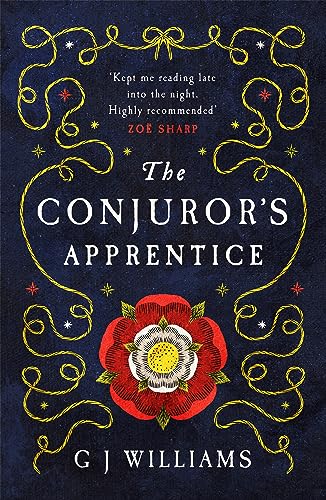
G.J. Williams, The Conjuror’s Apprentice: Dr. John Dee is the conjuror here, entertainingly portrayed and seen through the eyes of his Welsh apprentice, Margaretta, who can read people’s emotions. They are called upon to investigate the murder of a boy whose body was found in the Thames, and whose secrets may incriminate his employer, Lord Cecil. The characters leap off the page beautifully, real history is woven in without a bump, and the pace is cracking. I look forward to the next one.

Aline Templeton, The Trumpet shall Sound: The beautiful setting of Ramillies, a large private house now used as a music venue, is the scene for quarrels and jealousies over a declining music festival. Not perhaps the most convincing of Templeton’s endings, for me, but I still enjoyed her portrayal of breaking and broken relationships as usual.

Veronica Heley, Murder in the Garden, Murder by Committee, and Murder on a Bicycle: one of my favourite mostly cosy series and I’m delighted to see there are more, even if sometimes Ellie, the heroine, needs to be told exactly what to do with her horrible daughter.

Maureen Myant, The Confession: Though I knew this was the start of a series, it felt as if it could well be a standalone as for a while I wondered if the main police character would actually make it through the book. It’s written partly from his point of view and partly from the point of view of a woman with whom he unwisely becomes involved, the estranged sister of a suicide victim who has left a confession to five murders. The trouble is that only one of the murders appears to have happened, and the perpetrator of that seems very safely convicted. Then, of course, the murders do start. A lovely twisty plot, even if some of the characters need a good talking to.

Whew! there we are. Some terrific reads in here. 

And where am I? One and a half chapters in to The Raven in Silver (Orkneyinga 6), nowhere near as far ahead as I should be or wanted to be, but at least it has started.

Friday, 26 June 2026

Second set of books read March to June

 The next lot - in no particular order:

Linzi Day, Midlife in Gretna Green: This is one of those books where a woman at a crossroads in her life discovers she has inherited magic powers from a female relative. It’s a tight little genre, but certainly this is well done, complete with talking cat who reminds our heroine of Dame Maggie Smith as the Dowager Countess in Downton Abbey, and lots of laughs. Four percent in and I already wanted to kill Janet. Fortunately, she’s the main character’s boss, not the main character, and she’s clearly meant to be unpopular. The narrative cracks along smartly and Niki is very sympathetic. Forty percent in and I was itching to know (1) how she would deal with her new assistants and (2) what happened her husband. The house is a great character in itself, and the whole book forms a firm basis to start the series.

Mamie Philp, Mr. Murdoch is Dead: The main character, the narrator and investigator, is fairly sympathetic here and the plot jogs along well – a well-liked teacher at her old school is found dead, while one of the pupils is stabbed around the same time. I’d have liked a bit more actual conversation rather than ‘We agreed he was lying’ sort of statements – there’s a huge quantity of reported conversation which doesn’t portray the characters quite so well to me. The main character comes across instead as someone who principally communicates by the notes in her police notebook, but perhaps this was what the author intended. Still, aside from that this is very well written in an assured style, and the plot worked well.

Carmen Radtke, Blackmail and Broomsticks: Another lovely comfortable mystery in Willowmere and neighbouring town, with our witch, her familiar and her coven – and all the right food. I’m starting to come away from these books feeling hungry! Bex makes some serious progress in her personal life while starting to settle down in her professional role, while others around her have some revelations that I think might have an effect on the next book. Lots of fun – and now I need to go and have a snack.

Simon Brett, The Body on the Beach: Carole meets Jude in this, the first of the Fethering series, and is appalled and fascinated by her new neighbour with whom she plunges into investigating the murder of an elusive body on the beach. This gives us plenty of insights into the dreadful nature of Fethering society in its various layers and sensitivities, very amusingly portrayed as Carole and Jude gradually become friends.

Simon Brett, Death on the Downs: Carole happens on some bones in a ruined barn and becomes involved in the complex politics of a small village, in which Jude, as it happens, is also a player. I enjoyed Carole’s attempts to wield her feminine charms (probably more successfully than I would have) as she tries to sort out exactly who might know more about the bones, as the local policeman is far too closely connected with all that’s going on.

Simon Brett, The Torso in the Town: More social observation and delicate negotiation here in the third in the series. The police scarcely feature in this one while the ladies manage everything on their own in a town where everyone seems very willing to tell them everything – just not, quite, the everything Carole and Jude need to solve the case.

Simon Brett, Murder in the Museum: Carole has become a trustee at the museum in question, the carefully preserved family home of a fairly notable writer. His descendants are also on the board of trustees, which is blessed with the usual tricky characters and conflicting needs. When a body, which might date from the time of the writer, is found in the grounds, it’s time for Carole and her neighbour Jules to step in again and solve the mystery, while balancing the various demands of the possessive trustees. Though this has some nice insights into working in the heritage ‘industry’, it’s also another look at the relationship between Carole and Jules, made more awkward by the reappearance of an old flame of Jules’ who also involves himself in the case.

Simon Brett, The Hanging in the Hotel: A posh hotel run by an ex-model and old friend of Jude’s is the setting for two deaths, both solicitors, a supposed suicide and a supposed accident, but of course our ladies aren’t having any of that nonsense and persist in investigating, even when members of the Pillars of Sussex start queuing up to give them alibis.

Simon Brett, The Witness at the Wedding: Carole’s meeting with her son’s soon-to-be in-laws is complicated by the sudden murder of Gaby’s father. The family is not all they seem, and though there is a Sussex connexion there is more action in Essex and France in this book, and we find out a bit more about the mysterious Jude, too.

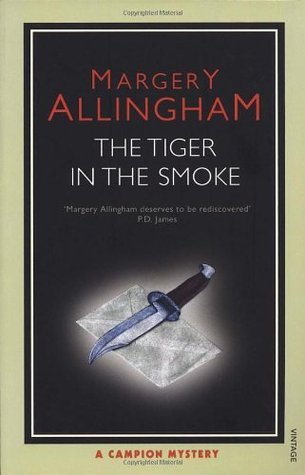
Margery Allingham, The Tiger in the Smoke: I’d never read this classic, nor anything else by Allingham. It’s more of a thriller than a whodunnit, and I’d like to go back now and read one of her earlier works. Set mostly in London in a dense fog, it is tremendously atmospheric and the characters are very richly drawn, if occasionally a bit overdone. My main gripe early on is that I found it hard to work out who was related to whom and how, but I think it might just be that I came late to the series. The plot wound together beautifully so that the coincidences seemed credible, even inevitable.

Just one more tranche!

Wednesday, 24 June 2026

Reading from March to June!

 Life has really, really been getting in the way of posting! But I have been reading, and in order not to fling everything at you all at once, I'll post in three lots (unless something stops me!)

So here are the first ten - I'm sure I've read more than this but it's all so disorganised that I have no idea any more ...

Marsali Taylor, An Imposter in Shetland: With an excursion to St. Kilda, this is an excellent installment in the Cass series. A social influencer has arrived and then vanishes, but to what extent did she really exist? And who has she harmed in the process? Very enjoyable, as is the domestic life of Cass and Gavin and the cats.

Lydia Travers, Death at the Highland Loch: This is a bit of a jolly jape as Lady Poppy Proudfoot investigates the murder of a bookie’s runner on the estate of her new friend Constance. This is definitely a cosy in that we don’t get to care a jot about the victim, and Lady Poppy goes round ogling the police inspector and defying him in equal measure. Young Gregor needs a clip around the ear – apart from his outright cheek, any child of that class speaking that much Scots at that period would have been sent to bed with no supper for a fortnight, never mind being allowed to sit up and dine with the grown-ups. I liked Constance’s back story and poor Isla who appeared and disappeared again – I hope she returns in future books. All in all, an amusing read.

Olga Wojtas, Miss Blaine’s Prefect and theUncharted Island: As usual, our heroine blunders gloriously around the scene misunderstanding almost everything, from the intelligence of the parrot to the identity of the murderer, while at the same time lecturing us on every possible subject from northern European linguistics to unarmed combat – with the possible exception of sheep. Another hilarious episode in this series.

Eva St. John: Fire in the Flint: Bish is now the U.N. Ambassador to Norwich, a rather uncertain position which no one really seems to want her to have. She still remains a detective in the Norwich police force and therefore investigates local smuggling and the murder of a notable merchant at a formal ball. Still trying to identify the rogue practitioner and come to terms with her past and her present, she does her best – but there are sequels to come.

Harriet Steel, Trouble in Nuala: A charming start – it’s nice to see a happy marriage for a detective! This one, though, must have some difficulties, as it’s a mixed marriage – a Sri Lankan policeman and his English teacher wife in the 1930s. De Silva has a delicate path to tread when there are complaints against a British planter and a hothead Indian-named lawyer takes an interest. This is a very gentle book though of course there are some nasty things in the background. I look forward to finding out more about the De Silvas and his police colleagues.

Jim Kelly The Water Clock: I love the interwar books by this author, and some of the haunting atmosphere of those is carried over into these more contemporary ones (written in the 1970s). The investigator is a journalist on a minor local paper, trying to sort out the discovery of bones connected with a long-ago petrol station robbery, while at the same time doing his best to find out more about the incident that caused his wife to be left in a coma. Culminating in a night of stormy floods, this is a well-paced book though it takes a while, I found, to be fully behind the main character. But I loved all the dry little sarcastic comments.

Jim Kelly, The Fire Baby: The first odd thing about this book for me was that it was the second I picked up in the course of one evening with a character in it called Bracken – this one is Bill, the other one Bob. Not exactly a common name. This deals with the aftermath of a tragic plane crash in 1976 in the Fens – one of the few survivors is now dying of cancer in the same ward as Dryden’s coma-bound wife, and wants to make sure that some secrets do not die with her.

Jodi Taylor, Out of Time: This Time Police episode gets extra marks for having a mobile library called BookyMcBookface (presumably after the Orkney one), splendid librarians, and the ongoing professional relationship between Commander Hay and Captain Farenden, who reminds me more and more of Bernard in Yes, Minister. There are some truly horrific scenes in this one but also some great laughs, and as always I read it far too fast.

Carmen Radtke, Ghosts and Grimoires: If you follow this author’s Genie & the Ghost series as well as the Willowmere one, you’ll enjoy this crossover where Genie and Adriana appear in Bex’s world to solve a puzzle to the benefit of all concerned. The crow is a bit disturbing, but otherwise this is another jolly mystery for Bex and Cosmo. Very enjoyable.

Laura Shepherd-Robinson, The Art of a Lie: One of the shortlist for the CWA Historical Dagger, this is set in Georgian London and concerns a recently widowed confectioner and Henry Fielding’s investigation into her husband’s murder. When a handsome gentleman comes into her shop and introduces her to the concept of iced cream, her life changes radically – he offers to help her reclaim money she did not even know her husband had, which will help her save her threatened business. And I don’t know what else I can say without giving away too much of this very clever switchback of a plot that really had me on the edge of my seat, wondering what would come crashing to the ground first. There are a few slightly anachronistic phrases which made me stop, but otherwise this is an excellent read.

There, that's the first ten! More to follow.