Lexie Conyngham's Blog: writing, history and gardening.

Monday, 29 June 2026

And the last batch for now!


This should be me up to date for now!


Laura Shepherd-Robinson, The Art of a Lie: One of the shortlist for the CWA Historical Dagger, this is set in Georgian London and concerns a recently widowed confectioner and Henry Fielding’s investigation into her husband’s murder. When a handsome gentleman comes into her shop and introduces her to the concept of iced cream, her life changes radically – he offers to help her reclaim money she did not even know her husband had, which will help her save her threatened business. And I don’t know what else I can say without giving away too much of this very clever switchback of a plot that really had me on the edge of my seat, wondering what would come crashing to the ground first. There are a few slightly anachronistic phrases which made me stop, but otherwise this is an excellent read.


Fflur Dafydd, The Library Suicides: Quite an odd but enjoyable book set mostly in what I suspect is intended to be the National Library of Wales, in an alternative future where paper is banned as something that carries germs after the great pandemic. A fire is said to have destroyed most of the historical books in the library, too. Ana and Nan, identical twins, work in the library but the focus of their life is to take revenge on a poet and critic, Eben, whose harsh reviews (on behalf of the Smotherhood) caused their mother, a very successful writer, to commit suicide. As part of their plan, they trick a new security guard, Dan, into helping them, which he does in part by hacking into the security camera system to play old footage instead of what is actually happening. But this illusion is only one of many: nothing and no one is quite what it seems in this clever satire on all kinds of attitudes in society today.

Cecilia Peartree, The Way to Icy Death: A long-standing character in this delightful mystery series lies dead in the ice, and another familiar person is suspected. This is a classic whodunnit set in the gloriously eccentric Pitkirtly community with all its weird characters – lovely comfortable reading with lots of laughs.

Helen Harper, Gifted Thief: An alternative reality fantasy set in Scotland. Our narrator is the last representative of the hated Clan Adair, one of the ruling fae Clans, needed to help in a desperate plan to save magic from vanishing. However, she has grown up away from fae culture in a gang of professional thieves in Aberdeen, and though she has not been granted her fae powers she has a few skills that might come in handy – that and a genie trapped in a magic letter opener. This author has a few complete series set in worlds where magic is a given and strong women prevail against the odds – I like her sense of humour and I’m looking forward to reading more. 

Jean Gill, With Raven Wine: This may seem an odd title, but raven wine is a poetic kenning for ‘blood’ and there is certainly a good deal of it in this, the fourth in Jean Gill’s Viking quartet. For me, in this book the parallel stories in Orkney and the Mediterranean were woven together particularly effectively and of course came together at the end. These books are tremendously well researched and again I thought that in this one the research and the story sat very comfortably together. A favourite piece was the professional comparison of Viking and Constantinopolitan armour about halfway through, which was beautifully done – in fact, the whole Constantinople section, with the Orcadians suffering severe culture shock, was fascinating. And the climax of the book, the last few chapters, were gripping and emotionally charged, and provided a very satisfactory, if sorrowful, ending to the whole quartet.
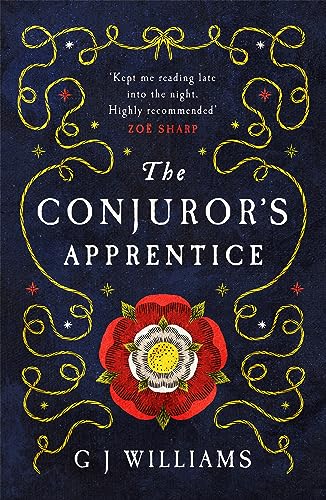
G.J. Williams, The Conjuror’s Apprentice: Dr. John Dee is the conjuror here, entertainingly portrayed and seen through the eyes of his Welsh apprentice, Margaretta, who can read people’s emotions. They are called upon to investigate the murder of a boy whose body was found in the Thames, and whose secrets may incriminate his employer, Lord Cecil. The characters leap off the page beautifully, real history is woven in without a bump, and the pace is cracking. I look forward to the next one.

Aline Templeton, The Trumpet shall Sound: The beautiful setting of Ramillies, a large private house now used as a music venue, is the scene for quarrels and jealousies over a declining music festival. Not perhaps the most convincing of Templeton’s endings, for me, but I still enjoyed her portrayal of breaking and broken relationships as usual.

Veronica Heley, Murder in the Garden, Murder by Committee, and Murder on a Bicycle: one of my favourite mostly cosy series and I’m delighted to see there are more, even if sometimes Ellie, the heroine, needs to be told exactly what to do with her horrible daughter.

Maureen Myant, The Confession: Though I knew this was the start of a series, it felt as if it could well be a standalone as for a while I wondered if the main police character would actually make it through the book. It’s written partly from his point of view and partly from the point of view of a woman with whom he unwisely becomes involved, the estranged sister of a suicide victim who has left a confession to five murders. The trouble is that only one of the murders appears to have happened, and the perpetrator of that seems very safely convicted. Then, of course, the murders do start. A lovely twisty plot, even if some of the characters need a good talking to.

Whew! there we are. Some terrific reads in here. 

And where am I? One and a half chapters in to The Raven in Silver (Orkneyinga 6), nowhere near as far ahead as I should be or wanted to be, but at least it has started.

Friday, 26 June 2026

Second set of books read March to June

 The next lot - in no particular order:

Linzi Day, Midlife in Gretna Green: This is one of those books where a woman at a crossroads in her life discovers she has inherited magic powers from a female relative. It’s a tight little genre, but certainly this is well done, complete with talking cat who reminds our heroine of Dame Maggie Smith as the Dowager Countess in Downton Abbey, and lots of laughs. Four percent in and I already wanted to kill Janet. Fortunately, she’s the main character’s boss, not the main character, and she’s clearly meant to be unpopular. The narrative cracks along smartly and Niki is very sympathetic. Forty percent in and I was itching to know (1) how she would deal with her new assistants and (2) what happened her husband. The house is a great character in itself, and the whole book forms a firm basis to start the series.

Mamie Philp, Mr. Murdoch is Dead: The main character, the narrator and investigator, is fairly sympathetic here and the plot jogs along well – a well-liked teacher at her old school is found dead, while one of the pupils is stabbed around the same time. I’d have liked a bit more actual conversation rather than ‘We agreed he was lying’ sort of statements – there’s a huge quantity of reported conversation which doesn’t portray the characters quite so well to me. The main character comes across instead as someone who principally communicates by the notes in her police notebook, but perhaps this was what the author intended. Still, aside from that this is very well written in an assured style, and the plot worked well.

Carmen Radtke, Blackmail and Broomsticks: Another lovely comfortable mystery in Willowmere and neighbouring town, with our witch, her familiar and her coven – and all the right food. I’m starting to come away from these books feeling hungry! Bex makes some serious progress in her personal life while starting to settle down in her professional role, while others around her have some revelations that I think might have an effect on the next book. Lots of fun – and now I need to go and have a snack.

Simon Brett, The Body on the Beach: Carole meets Jude in this, the first of the Fethering series, and is appalled and fascinated by her new neighbour with whom she plunges into investigating the murder of an elusive body on the beach. This gives us plenty of insights into the dreadful nature of Fethering society in its various layers and sensitivities, very amusingly portrayed as Carole and Jude gradually become friends.

Simon Brett, Death on the Downs: Carole happens on some bones in a ruined barn and becomes involved in the complex politics of a small village, in which Jude, as it happens, is also a player. I enjoyed Carole’s attempts to wield her feminine charms (probably more successfully than I would have) as she tries to sort out exactly who might know more about the bones, as the local policeman is far too closely connected with all that’s going on.

Simon Brett, The Torso in the Town: More social observation and delicate negotiation here in the third in the series. The police scarcely feature in this one while the ladies manage everything on their own in a town where everyone seems very willing to tell them everything – just not, quite, the everything Carole and Jude need to solve the case.

Simon Brett, Murder in the Museum: Carole has become a trustee at the museum in question, the carefully preserved family home of a fairly notable writer. His descendants are also on the board of trustees, which is blessed with the usual tricky characters and conflicting needs. When a body, which might date from the time of the writer, is found in the grounds, it’s time for Carole and her neighbour Jules to step in again and solve the mystery, while balancing the various demands of the possessive trustees. Though this has some nice insights into working in the heritage ‘industry’, it’s also another look at the relationship between Carole and Jules, made more awkward by the reappearance of an old flame of Jules’ who also involves himself in the case.

Simon Brett, The Hanging in the Hotel: A posh hotel run by an ex-model and old friend of Jude’s is the setting for two deaths, both solicitors, a supposed suicide and a supposed accident, but of course our ladies aren’t having any of that nonsense and persist in investigating, even when members of the Pillars of Sussex start queuing up to give them alibis.

Simon Brett, The Witness at the Wedding: Carole’s meeting with her son’s soon-to-be in-laws is complicated by the sudden murder of Gaby’s father. The family is not all they seem, and though there is a Sussex connexion there is more action in Essex and France in this book, and we find out a bit more about the mysterious Jude, too.

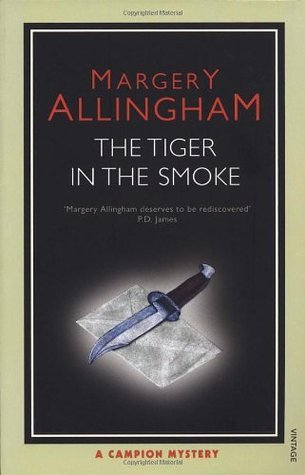
Margery Allingham, The Tiger in the Smoke: I’d never read this classic, nor anything else by Allingham. It’s more of a thriller than a whodunnit, and I’d like to go back now and read one of her earlier works. Set mostly in London in a dense fog, it is tremendously atmospheric and the characters are very richly drawn, if occasionally a bit overdone. My main gripe early on is that I found it hard to work out who was related to whom and how, but I think it might just be that I came late to the series. The plot wound together beautifully so that the coincidences seemed credible, even inevitable.

Just one more tranche!

Wednesday, 24 June 2026

Reading from March to June!

 Life has really, really been getting in the way of posting! But I have been reading, and in order not to fling everything at you all at once, I'll post in three lots (unless something stops me!)

So here are the first ten - I'm sure I've read more than this but it's all so disorganised that I have no idea any more ...

Marsali Taylor, An Imposter in Shetland: With an excursion to St. Kilda, this is an excellent installment in the Cass series. A social influencer has arrived and then vanishes, but to what extent did she really exist? And who has she harmed in the process? Very enjoyable, as is the domestic life of Cass and Gavin and the cats.

Lydia Travers, Death at the Highland Loch: This is a bit of a jolly jape as Lady Poppy Proudfoot investigates the murder of a bookie’s runner on the estate of her new friend Constance. This is definitely a cosy in that we don’t get to care a jot about the victim, and Lady Poppy goes round ogling the police inspector and defying him in equal measure. Young Gregor needs a clip around the ear – apart from his outright cheek, any child of that class speaking that much Scots at that period would have been sent to bed with no supper for a fortnight, never mind being allowed to sit up and dine with the grown-ups. I liked Constance’s back story and poor Isla who appeared and disappeared again – I hope she returns in future books. All in all, an amusing read.

Olga Wojtas, Miss Blaine’s Prefect and theUncharted Island: As usual, our heroine blunders gloriously around the scene misunderstanding almost everything, from the intelligence of the parrot to the identity of the murderer, while at the same time lecturing us on every possible subject from northern European linguistics to unarmed combat – with the possible exception of sheep. Another hilarious episode in this series.

Eva St. John: Fire in the Flint: Bish is now the U.N. Ambassador to Norwich, a rather uncertain position which no one really seems to want her to have. She still remains a detective in the Norwich police force and therefore investigates local smuggling and the murder of a notable merchant at a formal ball. Still trying to identify the rogue practitioner and come to terms with her past and her present, she does her best – but there are sequels to come.

Harriet Steel, Trouble in Nuala: A charming start – it’s nice to see a happy marriage for a detective! This one, though, must have some difficulties, as it’s a mixed marriage – a Sri Lankan policeman and his English teacher wife in the 1930s. De Silva has a delicate path to tread when there are complaints against a British planter and a hothead Indian-named lawyer takes an interest. This is a very gentle book though of course there are some nasty things in the background. I look forward to finding out more about the De Silvas and his police colleagues.

Jim Kelly The Water Clock: I love the interwar books by this author, and some of the haunting atmosphere of those is carried over into these more contemporary ones (written in the 1970s). The investigator is a journalist on a minor local paper, trying to sort out the discovery of bones connected with a long-ago petrol station robbery, while at the same time doing his best to find out more about the incident that caused his wife to be left in a coma. Culminating in a night of stormy floods, this is a well-paced book though it takes a while, I found, to be fully behind the main character. But I loved all the dry little sarcastic comments.

Jim Kelly, The Fire Baby: The first odd thing about this book for me was that it was the second I picked up in the course of one evening with a character in it called Bracken – this one is Bill, the other one Bob. Not exactly a common name. This deals with the aftermath of a tragic plane crash in 1976 in the Fens – one of the few survivors is now dying of cancer in the same ward as Dryden’s coma-bound wife, and wants to make sure that some secrets do not die with her.

Jodi Taylor, Out of Time: This Time Police episode gets extra marks for having a mobile library called BookyMcBookface (presumably after the Orkney one), splendid librarians, and the ongoing professional relationship between Commander Hay and Captain Farenden, who reminds me more and more of Bernard in Yes, Minister. There are some truly horrific scenes in this one but also some great laughs, and as always I read it far too fast.

Carmen Radtke, Ghosts and Grimoires: If you follow this author’s Genie & the Ghost series as well as the Willowmere one, you’ll enjoy this crossover where Genie and Adriana appear in Bex’s world to solve a puzzle to the benefit of all concerned. The crow is a bit disturbing, but otherwise this is another jolly mystery for Bex and Cosmo. Very enjoyable.

Laura Shepherd-Robinson, The Art of a Lie: One of the shortlist for the CWA Historical Dagger, this is set in Georgian London and concerns a recently widowed confectioner and Henry Fielding’s investigation into her husband’s murder. When a handsome gentleman comes into her shop and introduces her to the concept of iced cream, her life changes radically – he offers to help her reclaim money she did not even know her husband had, which will help her save her threatened business. And I don’t know what else I can say without giving away too much of this very clever switchback of a plot that really had me on the edge of my seat, wondering what would come crashing to the ground first. There are a few slightly anachronistic phrases which made me stop, but otherwise this is an excellent read.

There, that's the first ten! More to follow.