Lexie Conyngham's Blog: writing, history and gardening.
Thursday, 18 October 2018
Tomb for an Eagle - launch day!
We're off! Available on Amazon as ebook and paperback, just going through the actions on Kobo and Smashwords if they are your preferred emporia. If you like it, please review it where you found it!
Now back to Hippolyta 4 - The Thankless Child. Who says time travel is impossible?
Saturday, 6 October 2018
Viking Hiking
You know you’re in the right place when there are two
Vikings waiting for the ferry.
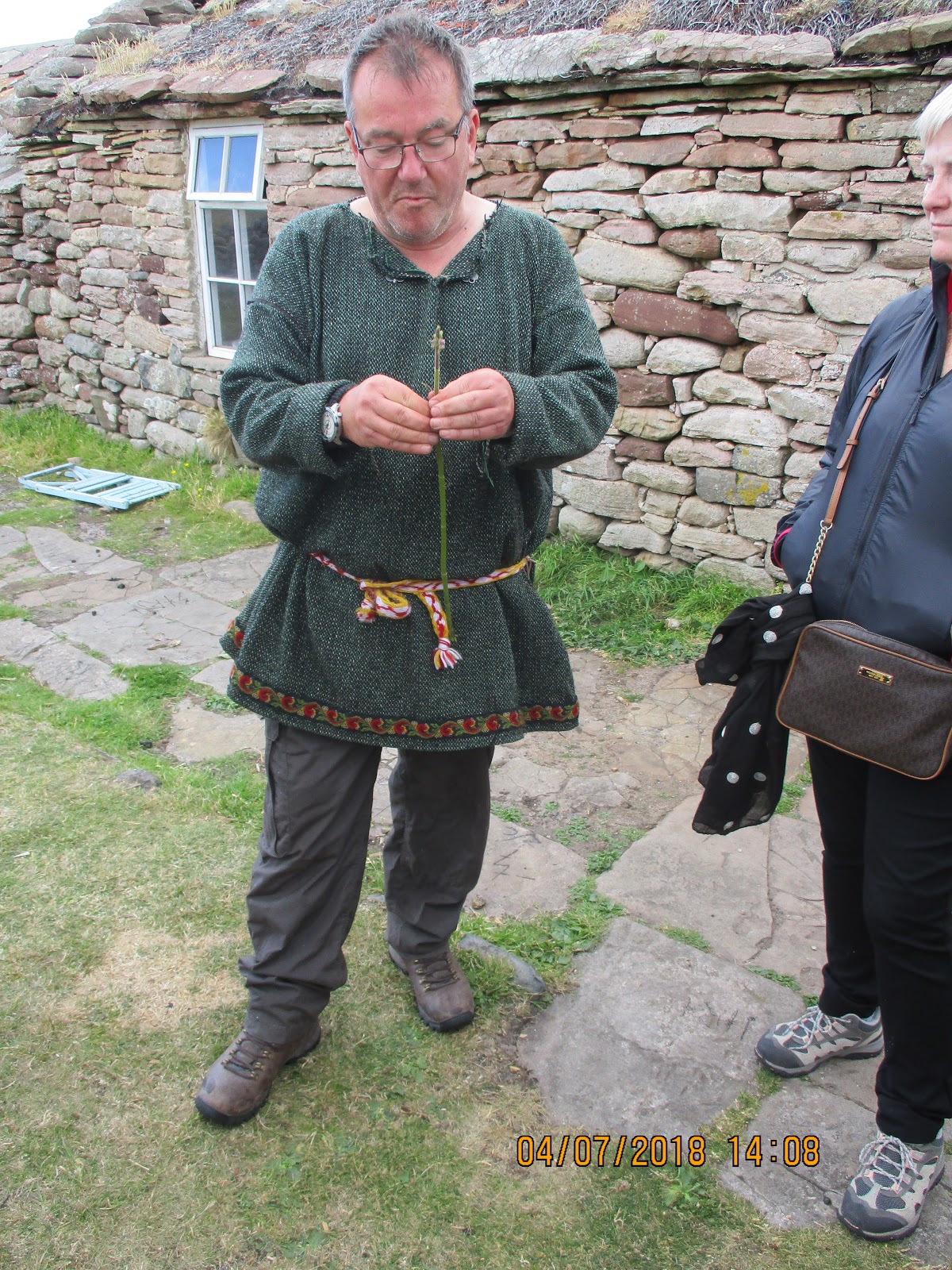
Near the statue to Dr. John Rae, Ragnhild and Hlifolf (usually Mark) are loading bags and
long iron rods on to the little MV Graemsay, ready to spend the day on the
Orkney island of Hoy. Gathering on the quay at Stromness on the Orkney mainland
are their customers who have signed up to go Viking Hiking for the day.
Mark wears a handwoven tunic with a tablet-weave belt (made by Ragnhild), while Ragnhild is in a long overdress with the traditional shouIder brooches and beads, with little woven bags on the belt at her waist.
We spend the thirty-minute ferry journey getting to know one another, while the boat skims between islands to our harbour, a small pier at the bottom of a hill.
Mark loads the gear on to one of the two local buses (one is driven by the post woman, and the other by Albert, who scoots about the island picking people up and dropping them off with no fixed route). We make sure we have pIenty of water and comfortable clothing. It’s a hot day, and the sea behind us glows deep blue and turquoise as if we are on a tropical island.
The vehicles disappear, leaving only the wind and birds for
background noise, and we set off on a steep climb, at first by road, to reach
the valley between Orkney’s two highest hills, Ward Hill at 479m and Cuilags at
433m. The road is scented with wild roses and meadowsweet, while tall yellow
flag irises and cow parsley pool in the fields just beyond. Sheep graze, some
already shedding their fleece in the hot weather.
As we walk at an easy pace, Ragnhild tells us more about flowers and plants we pass and their Viking medical uses, and when we take a break at the top of the pass she gives us a history of the Viking involvement in Orkney, from invasion to settlement to Denmark giving the islands back to Scotland as a queen’s dowry. It’s idyllic in the sun, the grass sprinkled with tiny flowers in yellow, white and purple, but we have a good distance to go yet.
Easier to spot as it catches the sunlight on its
wind-dancing, white-bearded heads is the broad-leafed
cottongrass, only found
on Hoy in Orkney: the flatter ground around us glitters with its white strands.
Larks rise from the heather, singing into the intense blue sky, and great auks,
locally called bonxies, sweep slowly around the hillside on broad brown wings. Occasionally
on an abandoned fence post there is a stonechat calling.Ragnhild is knowledgeable about all things Orcadian, not just Viking times, and answers lots of questions from her hikers, though now and again she strides ahead (the path is easy to follow) and it seems almost as if she has wandered off to a time where she really is an Orcadian Norsewoman, blonde hair flying behind her, crossing the island to the bay and her longhouse home.
We pass Berriedale, Orkney’s oldest native woodland, birch
and rowan – not much use to the Vikings for boat building, though. Orkney has
very little timber and today the woodland is carefully preserved with
firebreaks. A waterfall tumbles through it as it lies tucked into a fold of the
hill. In the distance we can see the glittering sea on the other side of the
island, cupped in the valley we are walking. Our goal is in sight.
After two or three hours we cross wetland on a narrow
boardwalk, rejoin the road, and reach the end of the journey, the beautiful
Rackwick Bay, where Mark, or Hlifolf, has the fire going on some stones and a
huge horn of ale to welcome us. It’s very well received!
Then Ragnhild produces a long lump of beremeal dough - bere is an Orcadian form of barley, still much in use today and very tasty. She chops it into sections and we form our own bannocks, or flatbreads, and lay them to cook on a sandstone slab over the fire.
Mark has been making chicken stew - he’ll make a vegetarian one if requested. His Viking name, Hlifolf, is the name of the cook who was ordered to execute St. Magnus, the Viking earl of Orkney – the most famous cook in Viking history! As we wait for the meal to be ready Ragnhild tells us other tales from the sagas that have us laughing or awestruck, tales of battles and giants and mythical whirlpools. The stew is delicious, simple and very welcome, and the bannocks soak up the gravy.
Then Ragnhild produces a long lump of beremeal dough - bere is an Orcadian form of barley, still much in use today and very tasty. She chops it into sections and we form our own bannocks, or flatbreads, and lay them to cook on a sandstone slab over the fire.
Mark has been making chicken stew - he’ll make a vegetarian one if requested. His Viking name, Hlifolf, is the name of the cook who was ordered to execute St. Magnus, the Viking earl of Orkney – the most famous cook in Viking history! As we wait for the meal to be ready Ragnhild tells us other tales from the sagas that have us laughing or awestruck, tales of battles and giants and mythical whirlpools. The stew is delicious, simple and very welcome, and the bannocks soak up the gravy.
The wind rises a little so after our meal we find a
sheltered spot to try axe throwing, which is very popular, but requires some
practice!
We try writing runes with charcoal on some slabs of stone, then Ragnhild
shows us how to do tablet weaving, stretching the threads, turning them with
squares of cardboard and running the weft between them, so that we can make belts
like hers or Mark’s. Mark takes his turn to demonstrate how to make string from
nettles, fearlessly stripping the stem and twisting the fibres against
themselves to form a strong cord, then he gives us some tips on firelighting
without matches, Viking-style.
Ragnhild takes over and plays two replica instruments for us, a sheepbone flute and a kind of Pan pipe based on a wooden instrument found at York’s Coppergate excavation. The sounds are pretty, delicate for warriors around a camp fire. Then, as she sings a particularly blood-thirsty Viking song, we join arms and dance in a long winding string, giggling. It’s a great way to end the Viking experience.
To save us the walk to the ferry, Albert the minibus driver
collects us and takes us back by the road, where we’re lucky enough to stop by
an RSPB station to watch sea eagle chicks and see the father bird soaring
above. Further on Albert stops the bus again to point out a hen harrier in the
valley below us. We reach the little pier in comfortable time for our ferry
back to Stromness. We stand on the open deck, the wind in our hair, and in our
imaginations, instead of the modern engines, there is the sound of ancient oars
beating the water and a dragon on the prow.
Viking Hiking runs a few times in the summer, full days or half days, and is much to be recommended!
Monday, 17 September 2018
Tomb for an Eagle - available to preorder now!
Preorder link here! Well, if you're reading this first thing on Monday morning British Summer Time, give it a few hours, but some of us have to go to work and let the wheels of Amazon grind slowly while we're out selling books to students.
In the mean time, some of you have been asking -
Why Vikings?
A fair question! Bear with me, particularly if you're really into 19th century crime. It may not be as bad as you think!
As with any decision, it’s complicated, and starts in April 2017. I was helping my mother move house, and an old neighbour, whom I had not met since childhood, popped in to say goodbye. Talk went round to writing historical crime fiction, and he said ‘Oh, have you written anything to do with Vikings? I love Vikings!’ I explained gently that I did nice decorous early 19th century stuff, not hairy raiders for whom the art of crime solving might have been a bit of a luxury. But the idea lingered …
Summer holiday, heading down to Yorkshire. Though I’d
visited York many times, my main interests had been Roman and mediaeval, and
I’d never been to Jorvik. In the course
of looking at things to do, I found that the Viking centre had been badly damaged
in floods at the same time as Ballater had been struck, but had just reopened.
I decided to take a look, though already the idea of a Norse / Viking crime
novel was growing in my mind. Jorvik was terrific, and on the train journey
home I began reading about Vikings. A Viking crime novel set in York? Well,
maybe: or Norway, which I also enjoy visiting? I carried on writing the third
Hippolyta, and pondered.
I’m a devotee of the Out
of Doors programme on BBC Radio Scotland at half six on a Saturday morning.
One Saturday the presenters were following the newly-laid-out St. Magnus
pilgrim route in Orkney. I’d been to Kirkwall a few times, but didn’t know that
much about St. Magnus, or had forgotten about it. A Viking crime novel set on
Orkney?
So the work began. I started with the Orkneyinga Saga, and Richard Hall’s Exploring the World of the Vikings, simple books to help me see if
the idea was feasible. I tried my hand at nalbinding and tablet-weaving, and
knew I would have a wool-worker in the book – I could already see her. I added
Judith Jesch’s Women in the Viking Age
to find out a bit more about what my wool-worker would be like. I did a trawl
on Pinterest, trying to distinguish over-enthusiastic ‘reconstructions’ from
actual museum pieces and carefully researched models: clothing, buildings,
weapons, tools, gaming pieces. I went to the National Museums in Edinburgh and made
a close study of the Galloway Horde and some Viking silver. I contacted Fran
Hollinrake, custodian of St. Magnus’ Cathedral and, fortuitously, a friend from
university, and began to plan a research trip. On her recommendation I borrowed
The World of the Orkneyinga Saga, a
fine collection of scholarly papers on Orkney and Norse rule, which expanded my
reading list no end.
At Christmas I was given a stern-looking bear, now named
Magnus, to remind me to get on with my work. No need: I was hooked. I had not
done such an intensive study for years. I began to ‘audit’ (sit in on) a first
year History course at the university on Vikings, sitting eagerly in the front
row with plot ideas bubbling as I took notes – probably scaring the lecturers.
And gradually, the book – or will it be a trilogy? or a series? - began to take
shape.
Fran reminded me about Dorothy Dunnett’s King Hereafter, which I read when I was
still at school and which features Thorfinn Sigurdarson who is also a prominent
character in the series. To my shame I couldn’t remember too much about it and
I’ve been reluctant to reread it while I’m writing, so any similarities are
either coincidental or buried so deep in my memory that they are unconscious
copies! If they appear, I apologise, and will go back some day to sort it out!
Anyway, the first draft of the second one, A Wolf at the Gate, is now written, and I hope it might appear in the new year - in the mean time it's back to the 19th century for me!
Friday, 7 September 2018
Crime Tour of Scotland: Glasgow
A bit late for my August date with the crime tour, but this
time it’s Glasgow and Denise Mina.
Being a big fan of Taggart, I dashed to read Denise Mina’s
Garnethill when it first came out and eagerly devoured the series – I’m alarmed
to see that it is now published as ‘Vintage’. It is gloriously, properly,
Tartan noir, with the right touch of macabre humour, and I relished the leading
character of Maureen with her multiple troubles - waking with a bad hangover to find your boyfriend in the next room with his throat cut is not a good start to any day. I also read Sanctum, a standalone, which is
one that really gets under the skin – years later, though I’m hazy about the
events in the book, I can still feel the atmosphere of it. I have not yet, I
must admit, ready any of her Alec Morrow series, but that’s a treat in store!
Denise Mina is busy on the Tartan Noir crime scene, contributing short stories
and other work to collections and collaborations, and she’ll be at Bloody
Scotland later this month.
I don’t know whether it’s that early influence of Taggart,
or whether it’s because I lived in Edinburgh, but I feel that Glasgow is a
better setting for tartan noir than Edinburgh is. I suppose people like the
Jekyll & Hyde view of Edinburgh, the posh surface and the dark underbelly,
but Glasgow has that black humour, the dry one-liner, that somehow is not quite
Edinburgh. It’s not the nasty place it might have been in the 1950s and 1960s –
it was an early City of Culture - but there is still a substantial roughness to
Glasgow, a defiant self-sufficiency. Glasgow, therefore, sits comfortably in a
good number of crime novels, whether it’s only part of the whole as in Peter
May’s Lewis books or Libby Patterson’s Hebridean Storm, or a complete
background as in Lin Anderson’s excellent Rhona McLeod books. There are also
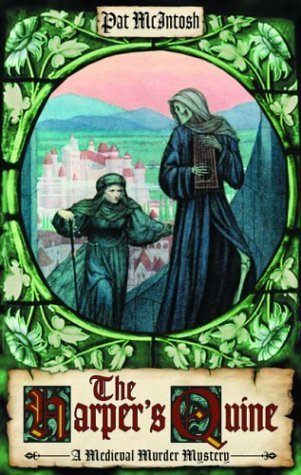
Pat McIntosh’s terrific Gil Cunningham books, set in mediaeval Glasgow – Glasgow
houses the third oldest university in Scotland which makes it the fifth oldest
in the U.K. It’s a sprawling city with a rich and diverse cultural and
industrial heritage. In fact, there is room, I should have said, for a good bit
more Glasgow crime on the fiction scene.
Saturday, 18 August 2018
Two months to Tomb for an Eagle - let's have a cover reveal!
I've never waited so long from end of writing to publication day for a book, and it's trying my patience! But I needed a certain number of ducks to be in a row - and anyone who read the blog post about the Ballater Duck Race will know that's not as easy as it sounds.
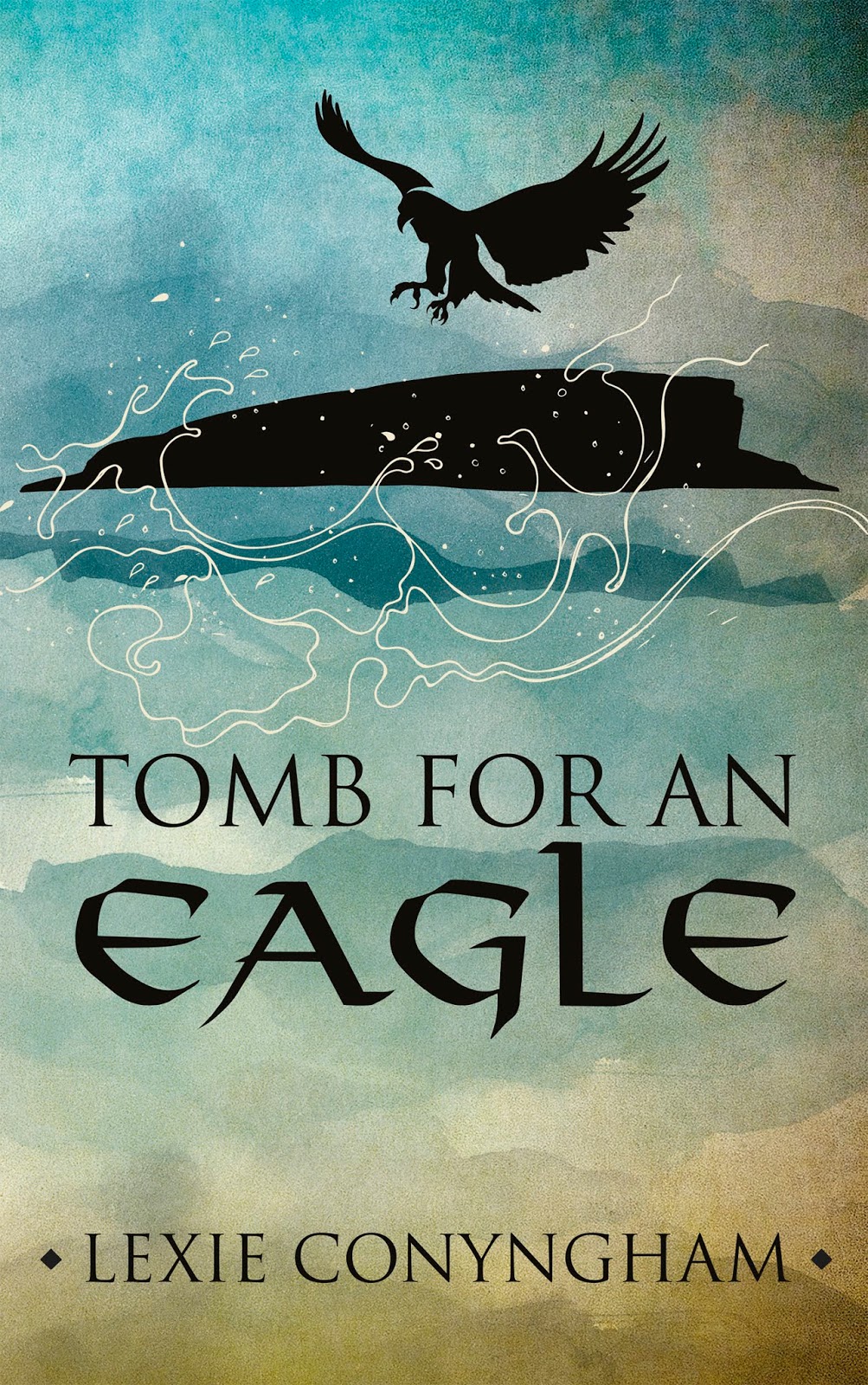
So anyway, exactly two months to go till launch day, one month till (with a following wind) the pre-order ebook is available, and now for those who aren't on the mailing list, here, at least is the cover of Tomb for an Eagle! I think Helen Braid at www.ellieillustrates.com has done a fantastic job.
A man lies under the tawny earth,
hands still clutching the knife that killed him.
Thorfinn Sigurdarson, Earl of all Orkney and
Caithness, has made a mistake, and he won’t let himself forget it. Now rumours
have started in the Norse lands that he might be getting a second chance – but
should he take it, when it means that dead men are walking?
Subscribe to:
Posts (Atom)