I did wonder if I'd skipped a month - there seemed to be a lot of books on my list just for February! So here we go - some crime, some fantasy, some other bits and bobs. There's bound to be something you fancy!

Carmen Radtke, Death at the Dock: It’s been
a little too long since I read the previous books in this series, but I was
delighted to meet the resourceful Alyssa Chambers again, one of the brides sent
off from Australia to meet husbands in the west of America. Alyssa is trying to
decide between two appealing men as the book starts, before she and her friend
Mrs. Wainwright are summoned to investigate a mysterious disappearance in Portland.
Alyssa is clever and sensible but of course has to work within the constrictions
of her society and I love the way the author acknowledges that, instead of writing
anachronistically. It’s a satisfying mystery in a very interesting setting with
just enough period detail and a realistic view of poverty. I hope it won’t be
the last Alyssa book!

Foday Mannah, The Search for Othella Savage:
This is a murder mystery set mostly amongst the Sierra Leonean community in
Edinburgh, where the problems seem to revolve around a wealthy evangelical
church that draws in many of the expats whether they want to join or not. Hawa,
funding her studies as a hotel maid, is joined by Anaka, an American singer
keen to understand her African roots, to help the police in their enquiries
when a number of young women are found dead. With nice touches of humour and
observation this isn’t as heavy a read as it might sound, but nor is it cosy.
My only qualm is that police detectives in this country are not called
‘Detective Smith’ or whatever but ‘Detective Constable Smith’ or whatever their
rank is – and that you don’t go ‘up’ to Ayr from Edinburgh!

Cecilia Peartree, The Body on the Hill: The third in this gentle murder mystery series, where Pamela Prendergast and her stepson Andy help the police to solve the murder and any other unpleasant goings-on. Very satisfying.

John D. Burns, Bothy Tales: Generally this is an entertaining and
informative catalogue of the author’s experiences in and around various
Scottish bothies, and his comments on them. Towards the end it grows more
fanciful, imagining a world where we must all be digitally connected and would
be arrested if we dared to go into the wilderness without full mobile phone
coverage, a future he strenuously resists. Well written and evocative.

Dorothy Dunnett, Tropical Issue: I really struggled with this,
and I was the classic Dorothy Dunnett fan of her Lymond series and King
Hereafter, and at least the first few Niccolo books. I didn’t really like
Rita, the narrator, nor the setting, nor any of the characters. But then we
discover the reason for the book’s peculiarities, and gradually some kind of
sympathy develops. In the end, through convoluted explanations, it all makes
sense and comes together and is very appealing, and I’ll probably read on
through the series.

Magnus Mills, The Restraint of Beasts: This is a very odd book,
telling the story of a fencing team – no, not swords, but grumpy installers of
specialist high-tensile fences for farms – who are involved in a sudden death
before departing for England (from Scotland) to fulfil a contract. The inexperienced
English foreman who tells the story spends his time in mild despair over his
reluctant, recalcitrant crew of drunkards and trying to do deals with the local
competition whom he would rather ignore. The book ends so abruptly I flicked
back and forth several times to make sure I hadn’t missed anything. It’s sort
of fun and sort of weird and sort of depressing all at once.

Samantha Ward Smith, Ravenscourt: This is unfortunately not
particularly well written, with grammatical howlers, some anachronisms and
inaccuracies which jarred almost from the start. The feel of Venice isn’t badly
done, though palazzi would have been better than palazzos (a common enough
usage in English). I was struggling by 15% with the trite, soppy love story
with the woke sentiments, and bored stiff. It’s all full of modern
sensitivities, and Alex is a fool.

Bram Stoker, Dracula: I had never read this
but of course knew a good deal of the story, so familiar bits kept appearing. I
liked the way we were thrown almost at once into an atmosphere of dread, and
very quickly Jonathan Harker was a prisoner in Castle Dracula and it almost
looks, so early on, as if there is no hope for him. However, with excellent
pacing the book moves on to Whitby and elsewhere, with the striking character
of Mina Harkness taking the lead, educated, intelligent and loyal and a good
judge of what’s going on. Such a shame that Jonathan Harker is such a numpty.

Aline Templeton, Last Act of All: Another of
Templeton’s stand alone works, this time focusing on two actors married and
living in a small village, the nature of which in the end poisons their lives.
The husband is one of Templeton’s excellently drawn and thoroughly unpleasant
characters, but he’s not the nastiest in this place by a long shot, in the end.
She excels at these small community settings with deeply drawn characters, and
this is as good as any of them.

Liz Hedgecock, The Magical Bookshop: Three
books in one here. Jemma is made redundant and on impulse gets a job in a
second-hand bookshop, a building that very much controls what goes on inside
it. The owner, Raphael, is a touch too laid back to succeed, and the bookshop
cat, Folio, has an unreliable temper, but despite them Jemma is determined to
make the shop a wonderful success – helped by the discovery of a former
cathedral vault under the floor, the assistance of Carl, actor turned barista,
and Luke, suspiciously unhappy in daylight.

Rhys Dylan, A Matter of Evidence: Rather a sad plot, involving a
man released after being erroneously found guilty of rape, only to be murdered.
His mother disappeared under mysterious circumstances while he was in prison.
The team as usual are great even though the situation is a tragic one, and a
satisfactory conclusion was reached.

Carmen Radtke, The Case of the Christmas Angel: This one involves
Uncle Sal rather than Jack and Frances, and film studios in London, and is a
nice little tale to round up Christmas!
Carmen Radtke, The Case of the Christmas Bauble: A sweet
Christmas story involving Frances and Jack and one of their descendants. Like a
good cup of hot chocolate on a winter’s evening.

Ewan Wallace, Death Between the Rivers: This is slightly on the
edge of too explicit for me, but I also found there were too many people I was
expected to know about, and slightly too much information given on the main
character’s personal life and medical history. I usually like fully rounded
characters as the main lead, but I felt she became a list of physical
conditions and needs. And why on earth would she not want her colleagues to
know she was diabetic? Surely that would be something they should be aware of. Also,
I have nothing against appropriate use of the passive, but it felt almost
defiantly frequent here. However, in the end it was quite a well constructed
book with a good, and not over-played, sense of local knowledge. I must read
the first in the series which I thought this was.

Alex Walters, Dark Corners: My second book featuring Inspector
Murrain with his odd sensitivities over things which might be involved in his
investigation, a kind of blurry second sight. This one relates to a child
kidnapping and murder, and there seem to be several threads to tie together.
It’s a very satisfying plot and played out in a traditional way so that the
reader can work it out for themselves.

Alex Walters, Snow Fallen: A great claustrophobic atmosphere in
this Kenny Murrain book as the snow rises outside both police headquarters and
the house where Kenny and his team are trying to protect several villagers from
a violent attacker, knowing that three people are already dead. The events
pretty much occur over the course of one night and it’s a wonderfully well
handled plot, mystery upon mystery until almost the very end when everything
becomes clear. One of his best.

Aline Templeton, Past Praying For: Once again, Templeton starts
her book with an almost unbearable situation with nasty people triumphing over
nice ones. I’d also like to note her acknowledgement that the hardest people to
minister to, in this day and age, are the self-satisfied well-off middle
classes, from a church perspective – Sunday mornings are for washing their
BMWs, not for going to church. But in the end this is a disturbing tale of the
effect a bad incident in childhood can have in adult life, and the tragedies
that can ensue.

Forbes Inglis, Phantoms & Fairies – tales of the supernatural in
Angus and Dundee: A classic local book written by a local man with a great
feel for the place and its stories. This is lightly written but some of the
stories are chilling enough for a dark winter’s evening.
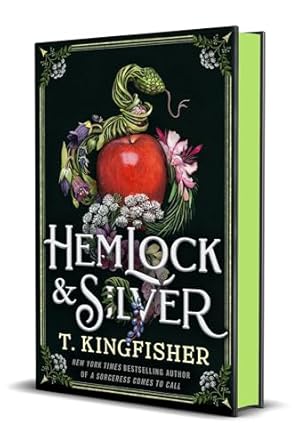
T. Kingfisher, Hemlock & Silver: Once again Kingfisher has
taken a well-known fairy tale, in this case Snow White, and retold it in her
own wonderful style. The main character here is a healer, called in by the King
to investigate the suspected ongoing poisoning of his daughter, Snow, after the
Queen has killed Snow’s sister, Rose. The healer is a wonderful character,
admitting to preferring problems to be solved concerning poison to actually
looking after the victims, though she is kinder than she allows herself to
seem. And the solution, involving cats and mirrors, is complex and clever and
lots of fun.

James Oswald, The Rest is Death: A good plot involving a new
laboratory intended to investigate cures perhaps leading to the infinite
postponement of death, slightly dodgy eastern European immigrants, and some
very mysterious corpses, and it’s another excellent Tony McLean case.

Alex Gray, A Pound of Flesh: I was galloping up a couple of wrong
alleys in this plot which winds the murders of Glaswegian prostitutes with a
series of murders of the men who use them. I like the main character, Bill
Lorimer, and his friends Solly and Rosie, but for some reason I find his loving
wife just a touch irritating – but that’s me. I’ve read and enjoyed a few books
in this series but never quite find them compelling enough to read them in
order, and I’m really not sure why. DC Knox was just stupid, I’m afraid, but
heigh ho, people are.

Ross Greenwood, The Book Club Killer: Intermingled with the plot
here is the question faced by several of the characters – is it time to retire?
The general sense is that this is the last fling for them and they have to
solve it to go out on a high. It became quite tangled towards the end but it
was still a satisfying plot, sufficiently surprising.
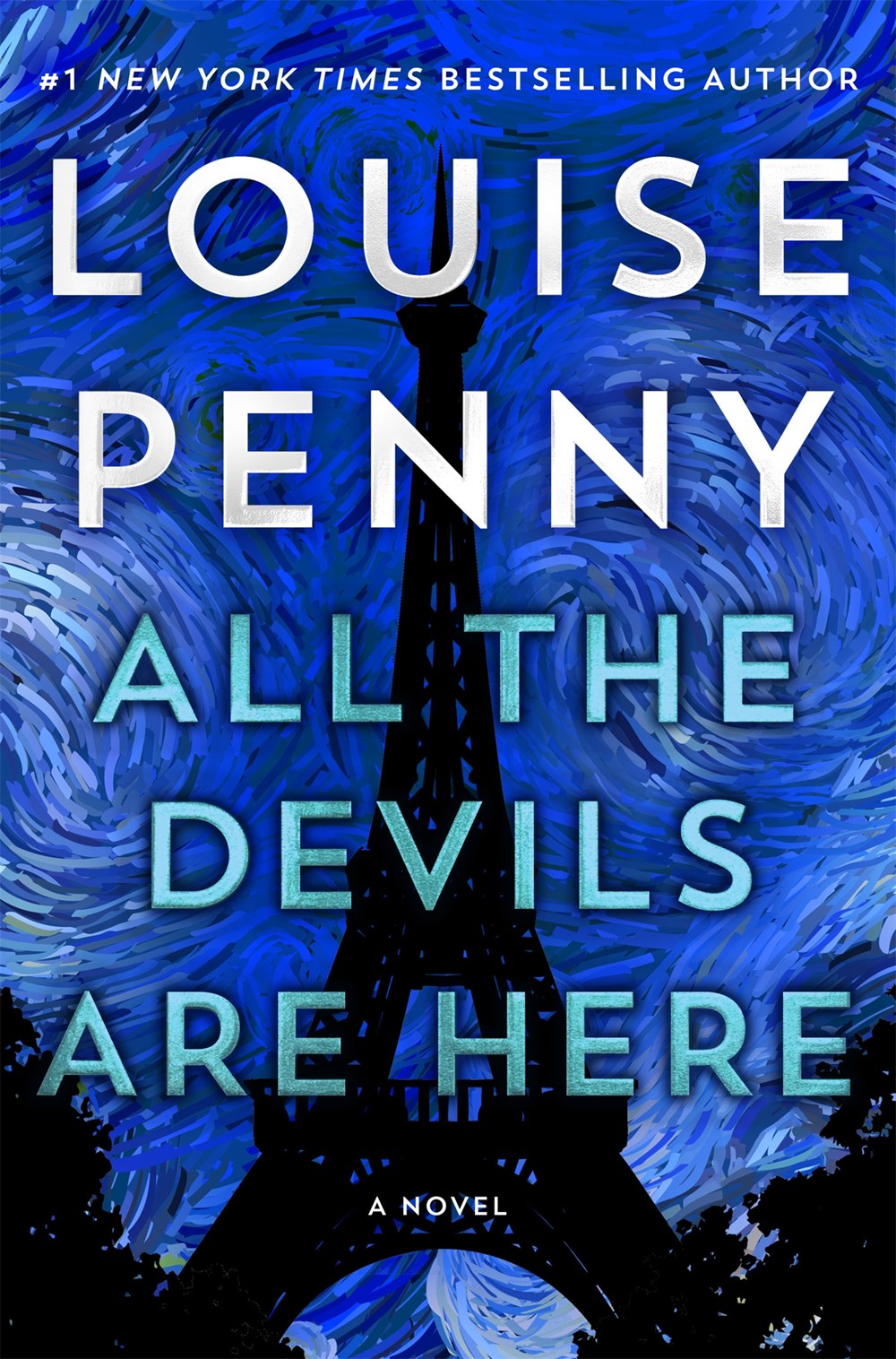
Louise Penny, All the Devils are Here: If you want an example of
well-used head switching, here it is, in the conversation between Gamache and
Dussaud. They tell you you shouldn’t, and generally they are right, but when
you break a rule, do it well and for a reason. The Gamaches are in Paris when
Armand’s godfather is almost killed in a hit-and-run and a body is found in his
apartment. The Paris police are fairly accommodating to Gamache and Beauvoir,
but they need to discover what the godfather was up to, unearthing corruption
in Beauvoir’s company or hiding his Nazi past. A grand conspiracy requires the
whole family to work as a team, confronting past slights and present
jealousies, to defeat the enemy.

David Gatward, How Grimm Saved Christmas: A Christmas novella. Ridiculously
sentimental and touching. I cried. And laughed a bit, too. And I’m glad Gordy
was back for the big moment.

Fergus Butler-Gallie, A Field Guide to the English Clergy: This
very funny, and sometimes slightly alarming, book, brings together brief
accounts of the lives of some of the Church of England’s more eccentric and
less clerical clergy, along with a useful glossary of church terms which is
also very amusing. It ranges from Tudor times to very recent, showing that the
grand tradition of pottiness is being faithfully upheld. Another Christmas
present, and a very entertaining one.

Dick Francis, 10lb Penalty: I started this, one I hadn’t read
years ago, during a visit to a library, and finished it when I came home. Very
much the usual formula and done just as well as always – here the specialist
subject is British politics with racing on the side, and the plot, apart from
attempted murders, concerns the narrator’s reconciliation with a distant father
while learning how to grow up. Unusually paced as it starts when the narrator
is seventeen and ends when he’s twenty-three, but it’s nonetheless fast-moving
for that.

Sarah Sheridan, The Fair Botanists: I promise I didn’t even know
this was set at the time of the King’s jaunt until I started reading it! At
first of course I was all nitpicking, and there are a few nits to pick, but
then I relaxed into an intriguing story of plants and perfumes and the niceties
of Edinburgh society at the time. An elegant and enjoyable read, though I find
myself hoping for a sequel – what happened to Mhairi, for example? And Edzell?
And Inverleith House? (well, I sort of know about that). Couple this with a
visit to the Royal Botanical Gardens, Edinburgh, and you’re all set.

No comments:
Post a Comment